Lost Surfboards
Show all 31 models
Hide models
- View all Lost Surfboards
-
Griffin8 -
3.0 Stub4 -
3.0 Stub Driver Thumb5 -
Big Rig Driver14 -
California Mid11 -
California Twin Pin4 -
Driver 3.04 -
Driver 3.0 Round3 -
Formula-113 -
Formula-1 Squash16 -
LayZToy II65 -
Mini Driver Re-Issue34 -
Mod Quad15 -
Original Puddle Jumper '2511 -
Party Crasher3 -
Party Platter4 -
Pisces4 -
Puddle Jumper Sting Round2 -
Quiver Killer '257 -
Rad Zapper5 -
Ripper Round8 -
RNF 966 -
RNF 96 Grom9 -
RNF '96 Kingfish10 -
RNF Twinzer '96er39 -
Round Nose Fish Retro Revamp 234 -
Smooth Operator Twinzer9 -
Speed Demon9 -
Sub Driver 3.0 Swallow1 -
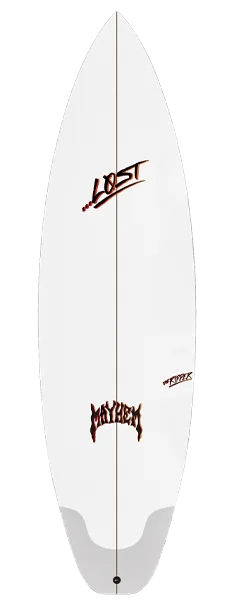
The Ripper34 -
Uber Driver6
-
Griffin8 -
3.0 Stub4 -
3.0 Stub Driver Thumb5 -
Big Rig Driver14 -
California Mid11 -
California Twin Pin4 -
Driver 3.04 -
Driver 3.0 Round3 -
Formula-113 -
Formula-1 Squash16 -
LayZToy II65 -
Mini Driver Re-Issue34 -
Mod Quad15 -
Original Puddle Jumper '2511 -
Party Crasher3 -
Party Platter4 -
Pisces4 -
Puddle Jumper Sting Round2 -
Quiver Killer '257 -
Rad Zapper5 -
Ripper Round8 -
RNF 966 -
RNF 96 Grom9 -
RNF '96 Kingfish10 -
RNF Twinzer '96er39 -
Round Nose Fish Retro Revamp 234 -
Smooth Operator Twinzer9 -
Speed Demon9 -
Sub Driver 3.0 Swallow1 -
The Ripper34 -
Uber Driver6
Lost Driver 3.0 Grom REAL Review
Dimensions
4’7” x 16.00” x 2.03” | 15.50
4’8” x 16.38” x 2.06” | 16.25
4’9” x 16.50” x 2.08” | 17.00
4’10” x 16.75” x 2.09” | 17.75
4’11” x 17.00” x 2.10” | 18.50
5’0” x 17.13” x 2.13” | 19.25
5’1” x 17.25” x 2.13” | 19.75
5’2” x 17.38” x 2.15” | 20.25
5’3” x 17.50” x 2.18” | 21.00
5’4” x 17.75” x 2.20” | 21.75
REAL Review
About this video
Trip Forman and Masen Barley review the Lost Driver 3.0 Grom surfboard, breaking down its wave range, rail performance, and sizing transitions as a growing surfer. Masen also shares his ideal fin setups for tube riding and pocket turns in waves ranging from waist-high to overhead.
Show video transcript
Trip Forman: I've surfed quite a few shortboards. Some of them you can do those critical snaps in the pocket, but maybe they don't work as good on the rail, or they work good on rail, but maybe not so much in the pocket. I feel like this board just filled those gaps in and worked good all around.
Welcome to REAL Watersports. I'm Trip Forman. Today we have Masen Barley with us. Masen, welcome.
Masen Barley: Thanks for the warm welcome.
Trip Forman: Today we are talking about Masen's Lost Driver 3.0 Grom. Masen, what are the dimensions and the volume on this board?
Masen Barley: On this board, the dimensions are 5'2" x 17.38" x 2.18" and 20.5 liters.
Trip Forman: From what I understand, when you got this board, you were like 98 or 99 pounds and two or three inches shorter than what you are now, just a little taller than this board. Now you're 5'5.5", right? And we just weighed you in on the REAL scale—you're 108 pounds. Let's dive into this board and talk about the performance of it, the wave range that you're using it in both here and when you're traveling, and where it fits into your quiver.
Masen Barley: I really like this board whenever the waves have a bowl. It could be waist-high to overhead, and it still rides super good and handles really well. I rode it last summer at Macaronis, and it handled super well in the bigger waves. Then I came home and it was waist-high and barreling, and it didn't falter—it was perfect.
Trip Forman: Nice. So basically anything with shape and push. It's not necessarily the height of the wave, it's more the power that the wave has. Once it has push, you're going to this board.
Masen Barley: Yeah. I feel like it did kind of tap out at eight feet on the top end, but it can go down to waist-high. With a bowl and some power, you're going to rip the wave.
Trip Forman: Just so that the viewers understand the Barley household measurement scale, eight feet is how big on the face?
Masen Barley: Two feet overhead.
Trip Forman: Okay, so eight feet is two feet overhead. Basically, you're using this thing waist-high up to like two feet overhead. What about using it at home versus using it at Macaronis? You look at the perfect waves in Indo, and there are so many boards that work over there where you think it's your fantasy board, and then you get home and the board doesn't work. Did you have that problem, or was it working really good in both places?
Masen Barley: I didn't have that problem with this board. Sometimes you get a board that works really good in other places, but then you get here and you have to be really picky about what works and what doesn't. This board just worked all around.
Trip Forman: While you had this board, was it the most used board in your quiver? Was it the one that you surfed the most on?
Masen Barley: Absolutely, yeah.
Trip Forman: What do you find when you get to ride a board a lot? Does your surfing improve more because you're more familiar with it?
Masen Barley: I feel like it does. I've ridden it so much that I just know it super well. When I surf boards that I don't know that well, if I just got it or it's recent, I don't surf it as well because I'm just learning the board and where its limits are.
Trip Forman: You want to become familiar with it so it's more of an extension of you, rather than trying to figure it out on the wave. Now you're turning this board back in because you feel like it's a little bit too small, both on the weight side a little bit, but more on the height side. Can you explain the sensations that you're feeling in the water that make you know it's time for a new board?
Masen Barley: I'm feeling I don't have as much rail to draw out, and that is kind of affecting me because I like rail length closer to my size. This has gotten too short, so it's not really compensating as well. On the weight side, I kind of feel it's bogging a little more and not smoothly gliding through those sections.
Trip Forman: On the weight side, meaning you feel like you might be a little too heavy.
Masen Barley: A little too heavy. Mostly it's the length and weight combined. It's not just the length or just the weight—the combination of the two makes it just a little too small.
Trip Forman: Knowing the size of this board and knowing your height and weight, if you were to get this board again, what size and volume are you looking at for the next step?
Masen Barley: I would look at a 5'6" by 22 liters for that next jump. That would be just a little taller than me and two more liters than this board.
Trip Forman: That is super helpful. We get a lot of positive feedback about all the Grom content and the sizing, because parents on 30 or 40-liter boards shopping for their kids' boards get lost in space with the numbers. Thank you so much, Masen. Now, this is your second Driver 3.0.
Masen Barley: My second Driver 3.0. My first one was a 5'0". We got it for Indo because I kind of needed a step-up for bigger waves since the boards I had were a little small. It worked really good on those bigger waves. It was a little big when we got it, but I grew into it, and that really changed things. It was fine that it was big because the waves were big, so it held those drawn-out turns on the big waves really well.
Trip Forman: You were using it like a step-up.
Masen Barley: Like a step-up. I was only riding it when it was bigger. If it was small, I was riding a different board, but it rode good in that.
Trip Forman: From what your dad told me, you and your dad were sizing these things at about your height. That 5'0" you got when you were roughly 5'0" or a little shorter, and this board you got when you were about this height. Then as you grew into it, having it be a little bit shorter than you was a positive, but not too much shorter—which is kind of the scenario that you're in now.
Masen Barley: The problem now is that I'm three inches bigger than it, so it just doesn't really work as a short one.
Trip Forman: The other observation is that when you were younger, you were growing in smaller increments, and then all of a sudden you turned the corner at REAL and you were four inches taller. So this board in particular, you grew out of a little bit faster. Let's talk about the fins you put in this board. This is FCS. What fins have you been using in it?
Masen Barley: When we went to Indo, I took the Kolohes, but I also got another set of fins for it. I found the Kolohes work good in smaller waves, in the stomach-to-chest or stomach-to-shoulder high range. When I get into the bigger waves, I liked the other fins because they were a little more raked out. They're white with black stripes—the Mick Fanning set. I got the Fannings for the trip just in case I blew out a fin or something, and I actually found that I liked them better for bigger waves. When you get into that head-high to overhead range, they held better on the face, and I felt like I could draw my turns out more and keep a steadier line. They also worked really good in the barrel. They held the board on the face and didn't drift down. With the Kolohes, they kind of tended to slide; they're the kind of fins you want for more snappy turns, so they slid a little in the tube. But the Fannings just held the line really good.
Trip Forman: We've definitely seen you a lot in the tube, whether it be here or on your trips. Before we get away from the fins too far, with your weight being upper 90s and now 100s, what size fins are you riding?
Masen Barley: I am actually still riding Grom FCS or extra smalls. I have not changed fins in a long time. It might be about time to move up to smalls, but I've just been riding extra smalls because that's what I'm used to.
Trip Forman: Let's talk about this board in the tube.
Masen Barley: I feel like it holds a super good line because the rails are a little more rounded through the middle. I have two other boards that are fun, but I can't really do good turns on them. I like this board for a day when it's kegging, and then you come out of the barrel and there are sick turn sections. You can just get barreled and then do turns, and that's where this board really works for me.
Trip Forman: Good combination. Use the barrel, come out, and do a big carve. You're not having to choose to do one or the other—you can go to town and do both.
Masen Barley: Right. I'm not on a turn board having to skip the barrel to do the turn because I'm going to slide out, or in the barrel unable to do the turn because the barrel board isn't built for that. This board really works all around.
Trip Forman: That's good to know. The Driver 3.0 in the Lost lineup is a workhorse. There are so many pros and free surfers using that board in so many different applications. Seeing you surfing it and literally getting better on every wave you take has been really cool to watch. For the groms out there watching this, do you have any advice on riding these types of boards, or something you learned in the course of time that you had this board?
Masen Barley: I've surfed quite a few shortboards, and some of them you can do those critical snaps in the pocket, but maybe they don't work as good on the rail, or they work good on rail but maybe not so much in the pocket. I feel like this board just filled those gaps in and worked good all around.
Trip Forman: Awesome. That's good to know, Masen. Thank you so much for joining us. If any of you out there have any questions on the Lost Driver 3.0 Grom or would like to place an order for one, stock or custom, you can reach us at the shop at 252-987-6000 or look us up online at realwatersports.com/surfing. Thanks for tuning in.